All the books
Every book on this shelf earned its spot on the quality of its ideas. Not hype, not bestseller lists — just books that genuinely change how you think about money.
Showing 27 books
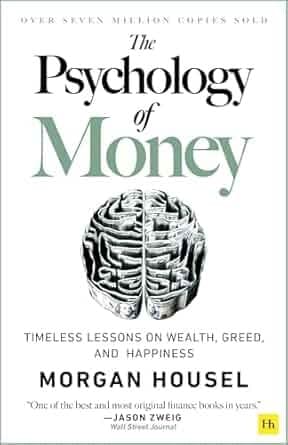
The Psychology of Money
Timeless lessons on wealth, greed, and happiness. Morgan Housel explores how our relationship with money is shaped by our emotions, biases, and personal history — not spreadsheets.
- ★Wealth is what you don't spend — it's invisible by nature
- ★Reasonable > rational when it comes to financial decisions
- ★Saving is the gap between your ego and your income
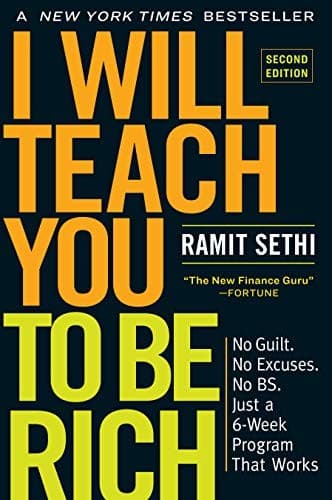
I Will Teach You to Be Rich
by Ramit Sethi
A no-BS, 6-week program for young people to get their finances in order. Ramit Sethi cuts through the noise to deliver actionable advice on banking, saving, investing, and spending guilt-free.
- ★Automate your finances so you never have to think about it
- ★Spend extravagantly on what you love, cut ruthlessly on what you don't
- ★Open the right accounts — most people don't even have that
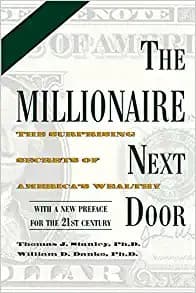
The Millionaire Next Door
The surprising truth about America's wealthy. Based on research of actual millionaires, Stanley reveals they live below their means, drive used cars, and accumulate wealth quietly.
- ★Most millionaires don't look like millionaires
- ★Living below your means is the foundation of wealth
- ★High income ≠ high net worth
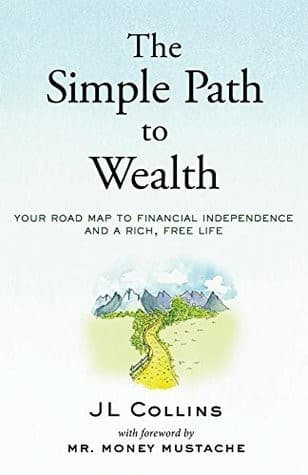
The Simple Path to Wealth
by JL Collins
The clearest, most no-nonsense roadmap to financial independence ever written. Collins distills decades of investing wisdom into one simple truth: own index funds, avoid debt, and let time do the work.
- ★F-you money is the foundation of a free life
- ★Index funds beat almost every other investment strategy
- ★Avoid debt like the illness it is
The Wealth Ladder
A data-driven guide to building wealth at every stage of life. Maggiulli maps out the specific strategies that actually move the needle depending on where you are financially — not one-size-fits-all advice.
- ★Different financial stages require different strategies
- ★Data beats intuition in personal finance decisions
- ★Early career: focus on income growth over optimization
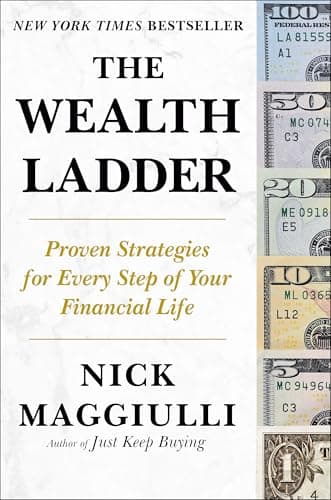
The Art of Spending Money
Most personal finance books tell you how to save. Housel asks a harder question: how do you spend in a way that actually makes you happy? A follow-up to The Psychology of Money that's equally sharp.
- ★Spending is a skill — most people are bad at it
- ★Experiences compound; things depreciate
- ★The goal isn't to spend less — it's to spend on what matters
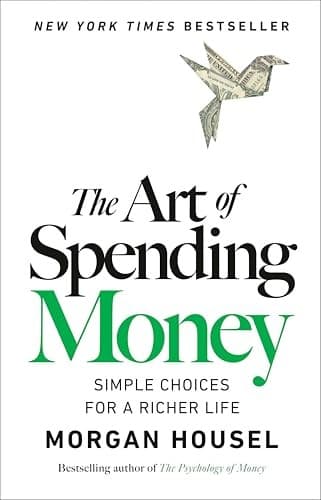
Quit Like a Millionaire
How two engineers retired in their early 30s — without a trust fund, inheritance, or lucky startup exit. A practical, math-first guide to FIRE (Financial Independence, Retire Early) that actually shows the numbers.
- ★Early retirement is a math problem, not a lifestyle fantasy
- ★The 4% rule: withdraw 4% of your portfolio annually to never run out
- ★Geographic arbitrage can dramatically accelerate your timeline
Money for Couples
by Ramit Sethi
The New York Times bestseller that tackles the #1 relationship stressor. Sethi's 10-step program helps couples align on money — not just spreadsheets, but the psychology, power dynamics, and conversations behind them.
- ★Money fights are rarely about money — they're about values and power
- ★Align on your Rich Life vision before optimizing tactics
- ★Automate shared finances so you fight less and build more
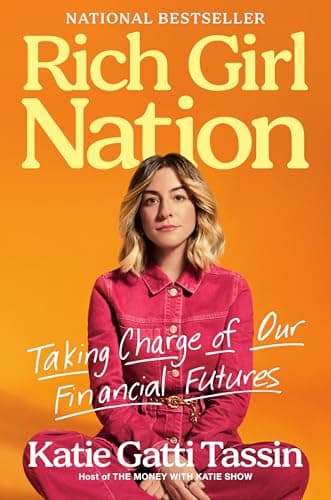
Rich Girl Nation
From the creator of Money with Katie, a leveled-up finance guide for women navigating a system that wasn't designed for them. Practical, sharp, and unapologetically direct about the wealth gaps that matter.
- ★The gender wealth gap is structural — understanding it is the first step
- ★Investing aggressively early is the single biggest lever for women
- ★Don't wait for a partner to start building wealth
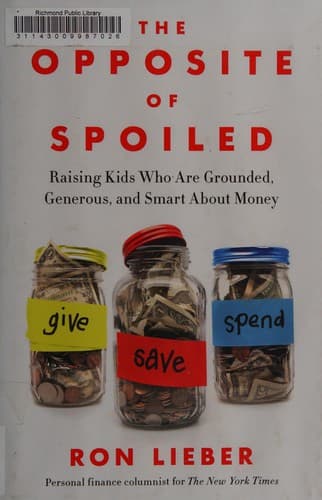
The Opposite of Spoiled
by Ron Lieber
How to raise kids who are smart, generous, and grounded about money. Lieber, the NYT's 'Your Money' columnist, gives parents a framework for talking about money openly — without creating entitled or anxious kids.
- ★Kids who understand money make better adults with money
- ★Allowance is a teaching tool, not a reward
- ★Answer your kids' money questions honestly — including about your own finances
The Almanack of Naval Ravikant
A curated collection of Naval Ravikant's wisdom on wealth and happiness. Not a finance book in the traditional sense — a philosophy of building leverage, making clear decisions, and defining wealth on your own terms.
- ★Seek wealth, not money — wealth is assets that earn while you sleep
- ★Specific knowledge can't be taught; it's built through obsession
- ★Play long-term games with long-term people
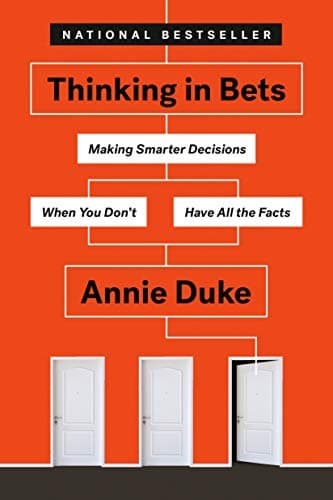
Thinking in Bets
by Annie Duke
A former World Series of Poker champion explains why smart people make bad decisions — and how to think probabilistically instead. Directly applicable to investing, financial planning, and any high-stakes decision.
- ★Separate decision quality from outcome quality — they're not the same
- ★Resulting: judging a decision by its outcome is a cognitive trap
- ★Think in probabilities, not certainties
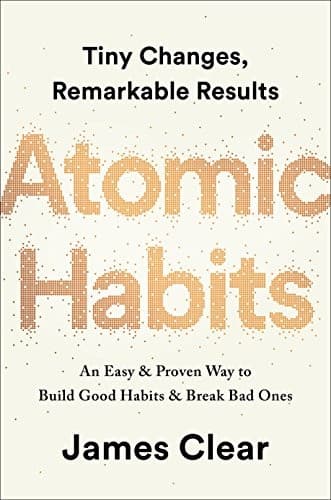
Atomic Habits
by James Clear
The definitive guide to building habits that stick. While not a finance book, the framework applies directly to saving, investing, and spending — the financial behaviors that compound over a lifetime.
- ★Small habits compound into remarkable results over time
- ★Identity-based habits are more durable than outcome-based ones
- ★Make good habits obvious, attractive, easy, and satisfying
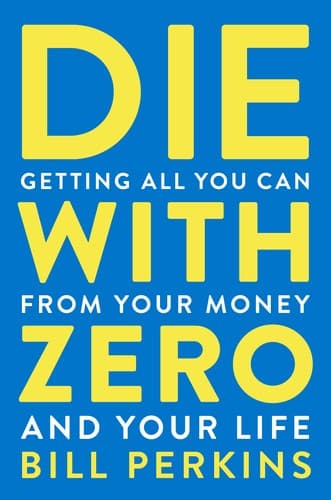
Die With Zero
by Bill Perkins
A provocative counterargument to conventional retirement wisdom. Perkins argues that dying with money left over is a financial planning failure — the goal should be to maximize your life experiences while you still have the health and energy to enjoy them.
- ★Dying with money unspent means you traded life energy for nothing
- ★Experiences create 'memory dividends' that pay out for the rest of your life
- ★Give money to your kids when they're young enough to use it — not after you're gone
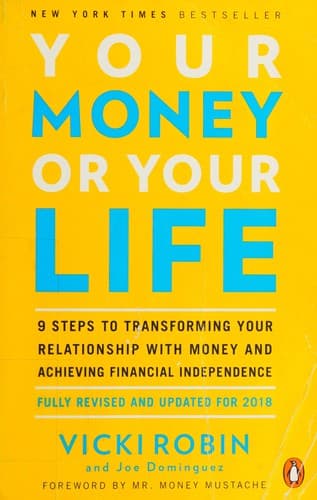
Your Money or Your Life
by Vicki Robin
The book that started the FIRE movement, written in 1992 and still unmatched. Robin and Dominguez reframe money as life energy — every dollar you spend costs not just cash but hours of your finite time on earth. The most philosophically rigorous personal finance book ever written.
- ★Money is life energy: every purchase costs a portion of your irreplaceable time
- ★The 'real hourly wage' is far lower than your salary once you account for work-related expenses
- ★Track every dollar — awareness alone changes spending behavior
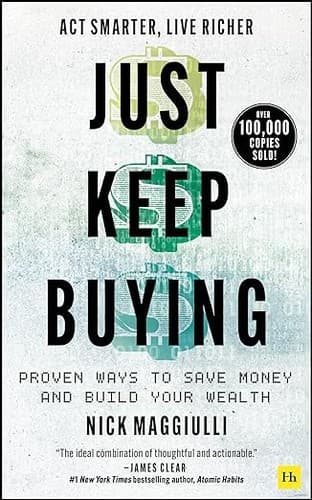
Just Keep Buying
Data-driven answers to the questions most personal finance books argue about endlessly. Maggiulli — the analyst behind Of Dollars and Data — cuts through financial debate with research: when to save vs. invest, how much to save, whether to pay off debt or invest, and why the best strategy is usually the one you'll actually stick to.
- ★For most people, investing more matters more than investing better
- ★Lump sum investing beats dollar-cost averaging roughly two-thirds of the time
- ★The hardest part of investing is doing nothing when everything feels wrong
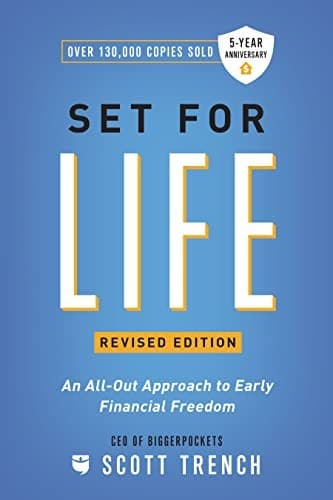
Set for Life
by Scott Trench
A step-by-step blueprint for reaching financial independence in your 20s and 30s, built around house hacking — buying a small multifamily property, living in one unit, and renting the rest. BiggerPockets CEO Scott Trench maps the exact path from broke to financially free using real estate as the accelerant.
- ★House hacking can eliminate your largest expense while building equity simultaneously
- ★The path to wealth starts with aggressively cutting expenses, then earning more, then investing
- ★Real estate investing doesn't require huge capital — it requires the right first property
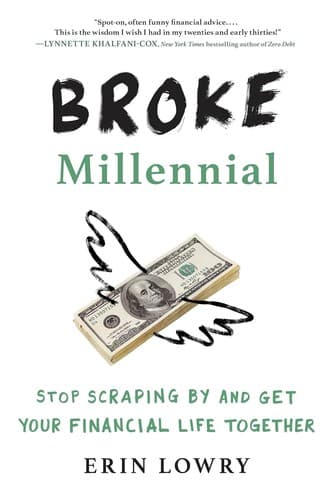
Broke Millennial
by Erin Lowry
A no-judgment guide to getting your finances together for the first time. Erin Lowry meets young people exactly where they are — anxious, confused, and avoiding their bank account — and walks them through the basics without condescension. The best first personal finance book for anyone who finds money overwhelming.
- ★Understanding your 'money story' — where your financial behaviors come from — is the first step
- ★You don't need to be perfect; you need to be consistent
- ★Automating your finances removes willpower from the equation
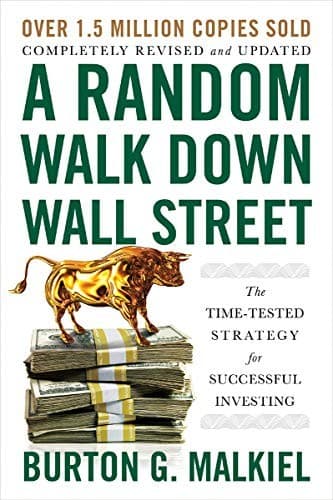
A Random Walk Down Wall Street
The academic foundation of passive investing, first published in 1973 and updated through the present day. Malkiel's central argument — that stock prices follow a random walk and cannot be consistently predicted — laid the intellectual groundwork for the index fund revolution before Vanguard even existed.
- ★Stock prices incorporate all available information; consistently beating the market is near impossible
- ★Technical and fundamental analysis rarely outperform a simple buy-and-hold index strategy
- ★Diversification is the only free lunch in investing
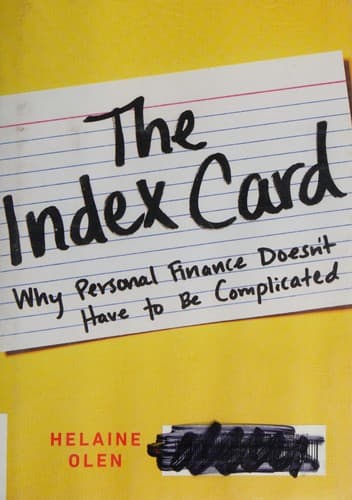
The Index Card
by Helaine Olen & Harold Pollack
The entire personal finance system on one index card. When University of Chicago professor Harold Pollack scribbled his financial rules on a notecard during a podcast, it went viral — because everything you need to know actually fits. Olen and Pollack expanded it into a book, but the premise holds: this stuff is not complicated.
- ★Max out your 401(k) and other tax-advantaged accounts before anything else
- ★Buy index funds; never buy actively managed funds
- ★Pay off your credit card in full every month, no exceptions
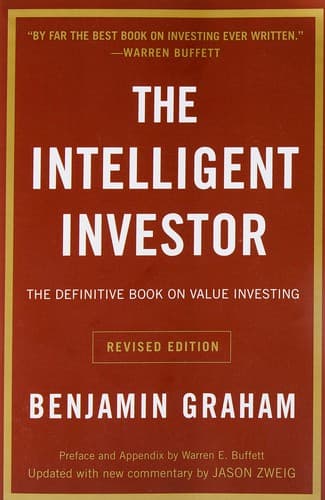
The Intelligent Investor
Warren Buffett calls this 'by far the best book on investing ever written.' Graham's framework for value investing — buying stocks at a discount to their intrinsic value and maintaining a margin of safety — has shaped more successful long-term investors than any other text in the history of markets. Dense, but foundational.
- ★The market is a voting machine in the short run and a weighing machine in the long run
- ★Mr. Market is your servant, not your guide — exploit his irrationality, don't follow it
- ★Margin of safety: never pay full price; always leave room to be wrong
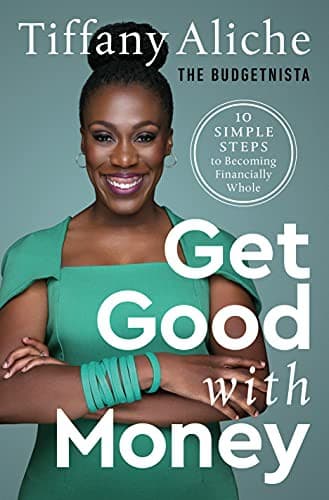
Get Good with Money
The Budgetnista's 10-step plan to financial wholeness. Tiffany Aliche rebuilt her own finances after losing everything in the 2008 recession, then taught over a million women to do the same. Practical, warm, and deeply accessible — the best step-by-step action plan for anyone starting from zero.
- ★Financial wholeness is the goal, not just wealth — peace of mind included
- ★Know your numbers: income, fixed expenses, savings rate, net worth
- ★Automate every bill and savings transfer; decision fatigue kills good intentions
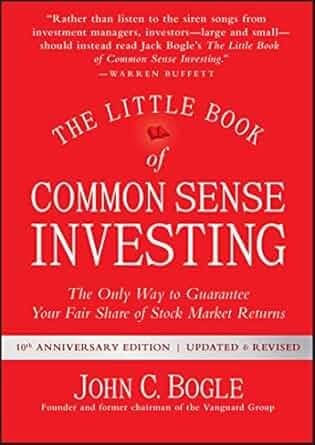
The Little Book of Common Sense Investing
The founder of Vanguard makes the definitive case for index fund investing. Simple, boring, and devastatingly effective — the only strategy most investors will ever need.
- ★Index funds beat most actively managed funds over time
- ★Costs are the enemy of returns — minimize fees relentlessly
- ★Don't try to beat the market; own the market
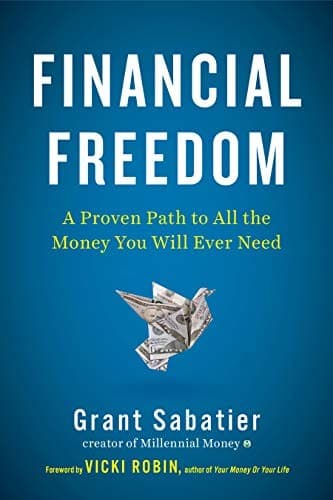
Financial Freedom
Sabatier went from $2.26 in his bank account to $1 million in five years. Unlike most FIRE books, this one is weighted toward the income side — side hustles, salary negotiation, and building earning power — rather than squeezing the last dollar out of a budget.
- ★There are only so many expenses to cut, but income is uncapped
- ★Calculate your real hourly rate — it changes how you value purchases
- ★Front-load saving aggressively; the early years do the heavy lifting
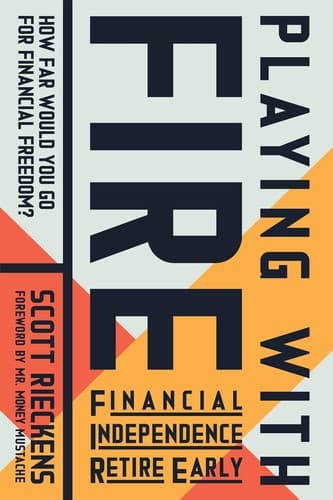
Playing with FIRE
One family's real, messy attempt at financial independence — told as a story rather than a system. Rieckens documents the arguments, the trade-offs, and the lifestyle changes that FIRE actually demands, which most books gloss over.
- ★FIRE is a relationship decision as much as a financial one
- ★The big three — housing, transport, food — decide your savings rate
- ★Lifestyle inflation is the quiet enemy of independence
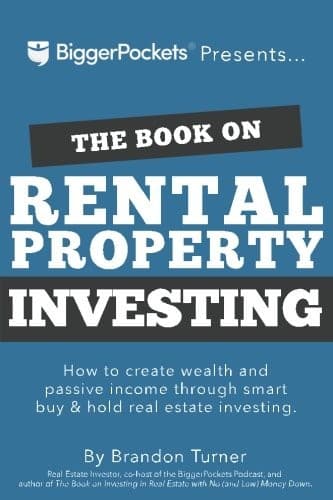
The Book on Rental Property Investing
The BiggerPockets playbook for buy-and-hold real estate. Turner walks through deal analysis, financing, tenant screening, and the arithmetic of cash flow — the practical detail most real estate books skip in favor of motivation.
- ★Cash flow, not appreciation, is what makes a rental safe
- ★You make your money when you buy — analysis beats optimism
- ★Run the numbers on vacancy, capex, and repairs before you bid
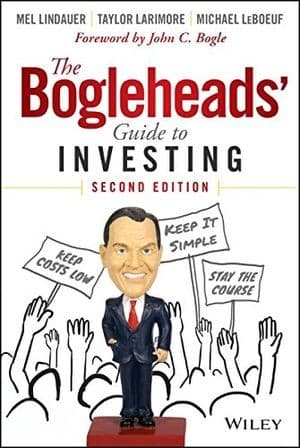
The Bogleheads' Guide to Investing
by Mel Lindauer, Taylor Larimore & Michael LeBoeuf
The community handbook built around Jack Bogle's principles: keep costs low, keep it simple, stay the course. Broader than Bogle's own books — it covers asset allocation, tax efficiency, and account placement in practical detail.
- ★A simple three-fund portfolio beats most complex strategies
- ★Asset location matters — put the right assets in the right accounts
- ★Costs and taxes are the two things you can actually control
Browse by topic
Each topic has its own page with the full shelf for that subject.