The FIRE variants get talked about like personality types, which is why so many people chase the wrong one. They aren't lifestyles. They're different target numbers, and confusing them can cost you years — either working longer than you needed to, or quitting on a number that was never going to hold.
The one number underneath all of them
Every variant is a modification of a single calculation: your annual spending multiplied by 25.
That multiplier is the inverse of a 4% withdrawal rate. Spend $40,000 a year, and the base target is $1 million. Spend $80,000, and it's $2 million. Notice which side of that equation you control most directly — your spending sets your target, and it does so with a 25× multiplier attached. A $500/month expense you eliminate permanently is $150,000 you never have to accumulate.
Every label below is just a different answer to "what counts as my annual spending, and am I funding all of it?"
Lean FIRE
A deliberately small target, built on a low spending number — often under $40,000 a year for a household. The appeal is speed: a smaller number arrives years sooner.
The failure mode is margin. A lean number assumes your expenses stay lean, and it leaves little slack for a health event, a family obligation, or a decade of poor returns arriving early. Lean FIRE works best for people who genuinely prefer a simple life, not for those treating frugality as a temporary sprint.
Fat FIRE
The opposite: financial independence without lifestyle compromise, typically built on six-figure annual spending and a target north of $2.5 million.
The failure mode here is that the target moves. Because Fat FIRE is defined by maintaining a lifestyle rather than by a fixed number, lifestyle inflation quietly raises the goalpost — and it's remarkably easy to spend a decade earning well and never actually arriving.
Coast FIRE
The most misunderstood variant, and the most useful for people in their twenties and thirties.
Coast FIRE means you've invested enough that compounding alone will carry you to your full number by traditional retirement age — without another dollar contributed. You haven't stopped working. You've stopped saving. Your job now only needs to cover current expenses.
The power is in the timing. Money invested at 28 has decades to compound; money invested at 48 does not. Hitting Coast FIRE early buys something more immediately valuable than early retirement: the freedom to take the lower-paying job, go part-time, or leave the career that's grinding you down — without derailing the plan.
Barista FIRE
A hybrid. You've saved enough that a modest part-time income covers the gap, so your portfolio isn't carrying the full load yet.
The name comes from a very American concern: health insurance. For workers in the US, employer coverage is often the binding constraint on leaving a job, and part-time roles that include benefits solve a problem that has nothing to do with the portfolio. Readers outside the US can generally ignore this variant's original logic, though the structure — partial income, partial withdrawal — still applies.
Which one you're actually chasing
Three questions usually settle it. What is your real annual spending, honestly measured rather than estimated? Would you rather arrive sooner with less margin, or later with more? And are you optimizing for never working again, or for not needing this particular job?
That last question is the one people get wrong most often. A lot of what looks like a desire to retire early is a desire to stop doing one specific thing — and Coast FIRE solves that years before full FIRE does.
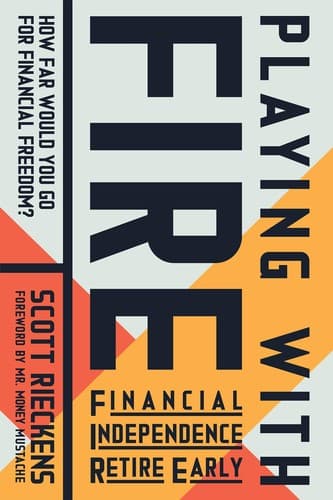
Scott Rieckens' Playing with FIRE is good on the lifestyle trade-offs these choices actually require, and Quit Like a Millionaire is the better read if you want to pressure-test the numbers behind whichever variant you land on.