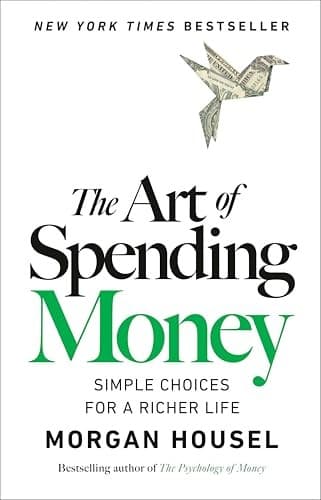
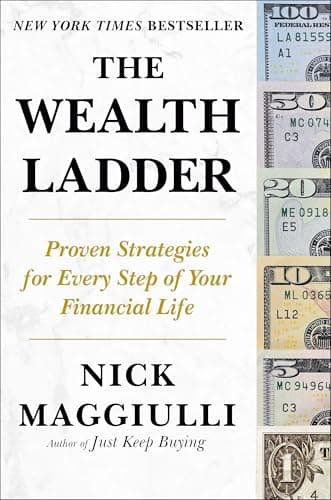
There's a strange gap in personal finance literature. Hundreds of books on how to save, invest, and accumulate. Almost none on what to actually do with the money once you have it.
Morgan Housel fills that gap with The Art of Spending Money. His argument is direct: spending is a skill, and most people are terrible at it — not because they spend too much, but because they spend on the wrong things in the wrong way.
The hedonic treadmill is real
Housel points to decades of psychology research showing that after basic needs are met, more stuff produces diminishing returns to happiness. The vacation house that was exciting in year one is ordinary by year three. The car upgrade gives you a week of joy, then becomes background noise.
What does hold its value? Experiences, relationships, time, and control over your schedule. These things depreciate slowly or not at all. The challenge is that they're harder to buy directly and don't signal wealth to others — which is precisely why most people underinvest in them.
Where you are in life changes the calculus
Nick Maggiulli's The Wealth Ladder adds a useful frame: what good spending looks like depends entirely on your financial stage. Early-career spenders should focus almost entirely on income growth — the ROI of a professional development course or networking dinner dwarfs any portfolio optimization at that point. Mid-career, the math shifts toward debt elimination and tax efficiency. Late-career, spending on time and experiences makes more sense than ever, because there's less of it left.
Treating all financial stages identically is one of the most common and expensive mistakes people make.
The intentionality question
Housel's prescription is deceptively simple: spend extravagantly on the things that matter most to you. Cut without mercy on the things that don't. Most people do the opposite — they spend uniformly, diffusing their budget across subscriptions, upgrades, and social signals, then feel vaguely dissatisfied regardless of how much they have.
The question isn't "can I afford this?" It's "does this actually make my life better?" Those are very different questions, and surprisingly few people ask the second one.