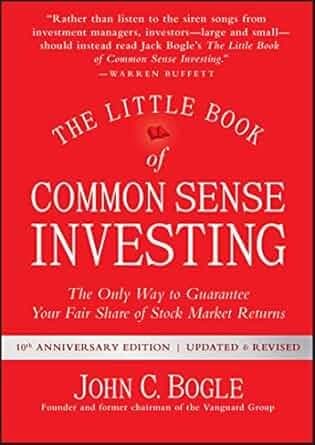
John Bogle's core argument in The Little Book of Common Sense Investing is almost offensive in its simplicity: buy a broad index fund, keep costs low, and never sell. That's it. That's the whole strategy.
And yet, this "boring" approach has consistently outperformed the vast majority of actively managed funds over any meaningful time horizon. Why? Costs. The average actively managed fund charges 1-2% annually. That sounds small. It isn't.
What fees actually cost you
On a $100,000 portfolio growing at 7% annually, the difference between 0.05% and 1.5% in fees is roughly $200,000 over 30 years. Not on returns — just on fees. You're paying someone else to probably underperform the market.
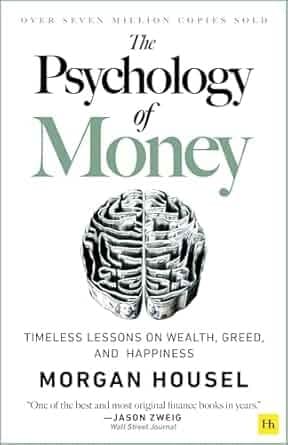
Morgan Housel adds another layer in The Psychology of Money: our tendency to equate activity with results leads us to overtrade, chase performance, and sell at exactly the wrong time. Index funds remove that temptation by design.
The discipline it requires
The hard part isn't the strategy. The hard part is sitting still during a crash, watching your balance fall 30%, and doing nothing. That's where most investors destroy their own returns. Index funds don't eliminate volatility — they just make the right behavior (holding) easier to execute.